
How to Run Successful Literacy Centers in First Grade
Have you ever wondered what it takes to run successful literacy centers in your first grade classroom? Well, you aren’t alone! I get this question from teachers all the time! In this post, I will share the top 6 things that will make running literacy centers successful in your classroom!
Want a deeper dive into running and managing first grade centers? Check out How to Run Literacy Centers Like a Pro! It is the step-by-step guide you need to plan your groups, schedule your centers, and more! Grab your freebie here!!
To start, what exactly are literacy centers?
Literacy centers are a time for students to practice skills that have already been taught, and get used to working independently, working in a small group, or working with the teacher in a small group setting.
Literacy centers are not the time for whole group instruction or learning something new. (You may teach something new at the teacher table, but center work should be independent review skills!)
You want students to be successful, and for that, it’s best to have them work on skills that have already been taught. This way they can be independent, build mastery, and (hopefully🤣) won’t interrupt your group at the teacher’s table.
Create groups for small group instruction
Tip number 1 is that you will need to create groups for your literacy centers. I like to group my students by need. This helps you to differentiate your teacher-table lesson and the independent work that students do when they aren’t with you.
A crucial part of creating groups is keeping them to 4 students or fewer. You want to have a small group because you can meet their needs more efficiently.
Another thing to think about is who your students work well with and who they may not get along with. This is important when they are working as a group somewhere in the room. The fewer distractions for you and the teacher-table friends, the better.
Literacy center ideas
Tip number 2 is to create literacy centers for your first graders. You will want to make centers that are easy for students to understand and simple enough that they can play the same game and change the phonics skill each week.
You’ll want to have a literacy center for each of the following areas of literacy: phonemic awareness, phonics, reading, and writing.
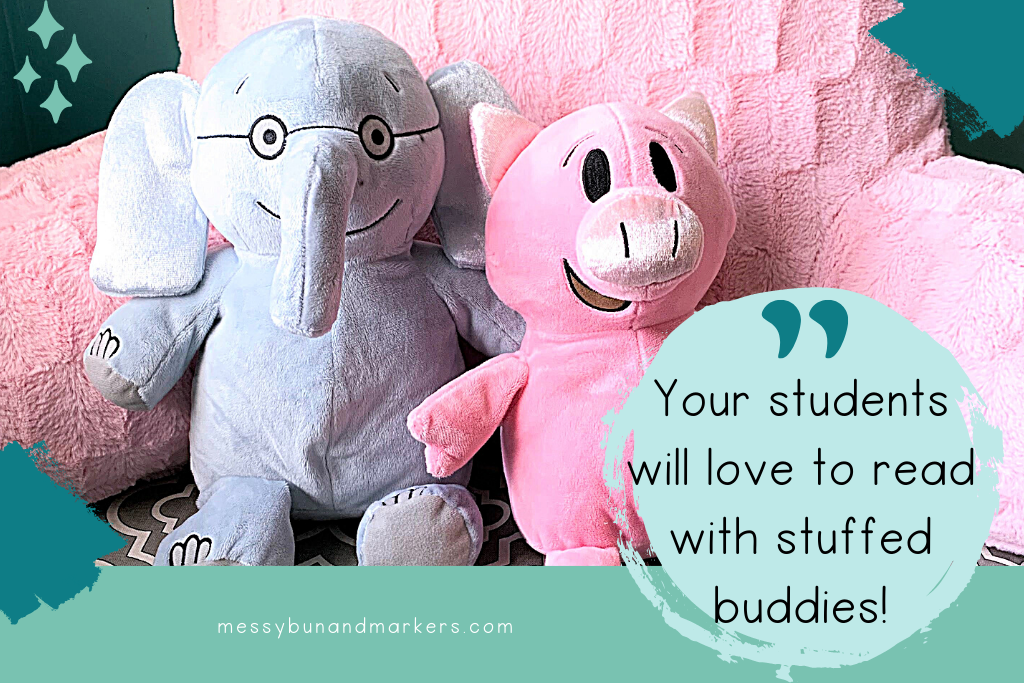
Some of my students’ favorite reading centers are:
- Listen to reading- CDs/audiobooks
- Read to a Stuffed Buddy
- Silly Voice Cards
Examples of literacy centers
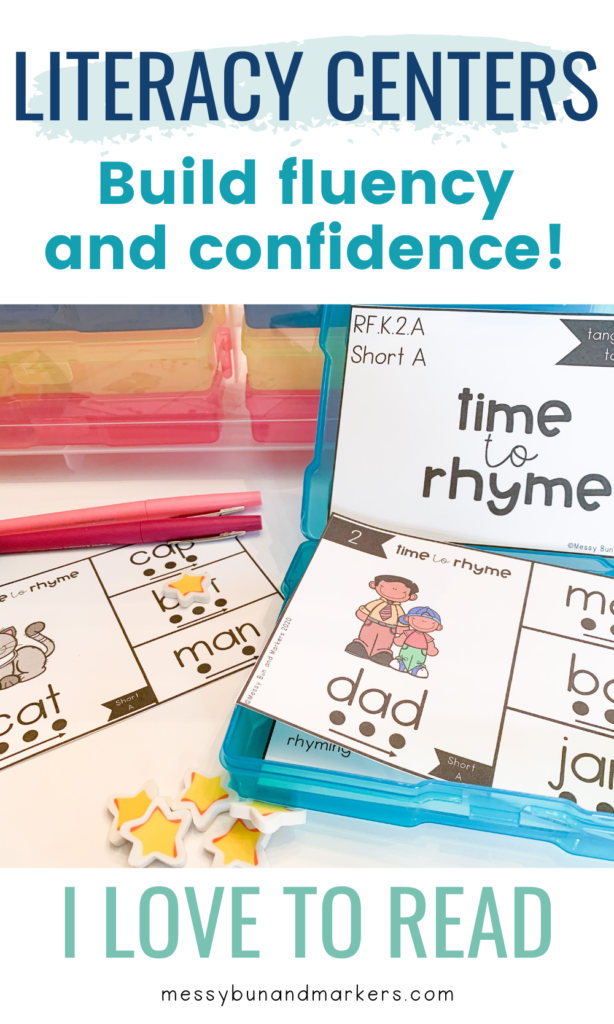
I use these phonics task cards as a literacy center. Students know the directions, (tap and blend words, then find the rhyme), and it is easy for them to do this activity no matter the phonics skill!
Remember to keep your literacy centers hands-on and fun! Literacy should be fun for your students and manageable for you!
Literacy center ideas organization
Tip number 3 is organizing your literacy center materials. Students need to be able to get their center materials quickly and get right to work.
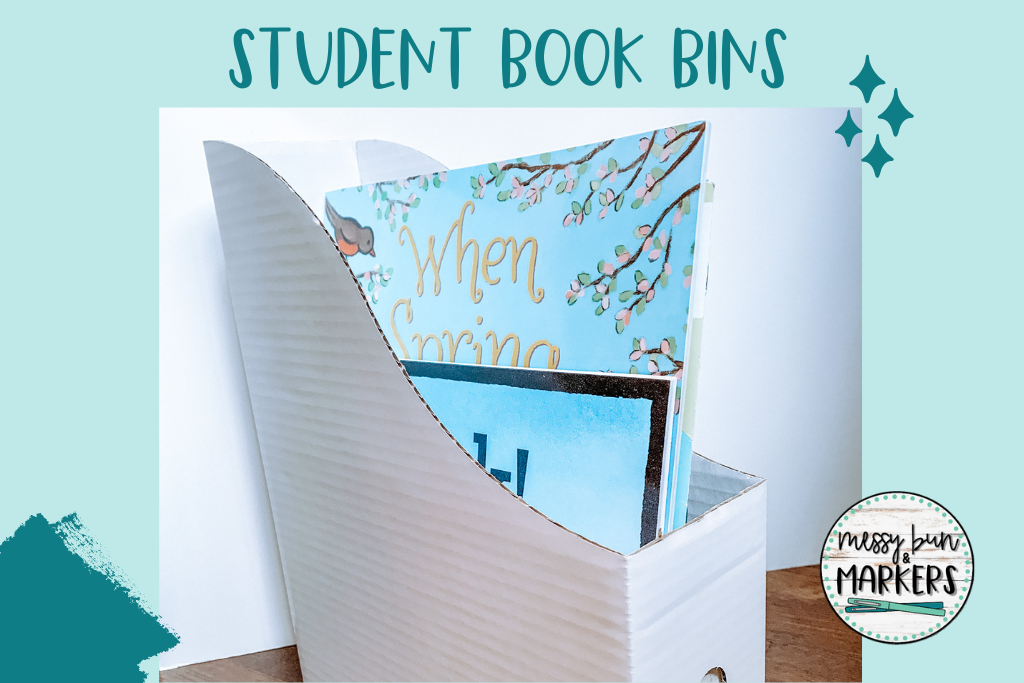
I love to use student book bins. They keep all their books, folders, and papers in one spot! Read more about how I use bins in the classroom here!
Literacy center materials
Keep your student work organized with Ketchup Folders! This is a great visual for students to see what they “May-Do” and “Must-Do.” I have an entire post on how to use Ketchup Folder Labels here!
I keep all of my teacher materials right at my teacher’s table and on a bookshelf nearby. This is where I store white boards, markers, wiki sticks, and more! All the fun essentials for working at the teacher’s table.
Guided reading activity schedule
Tip number 4 is to create a schedule. You need to decide if your students will complete one or two centers a day and how long each center will be.
You also want to think about which groups you will see more often at the teacher’s table for explicit instruction.
Make sure you download How to Run Literacy Centers Like a Pro for a detailed guide on how to create a schedule that works for you!
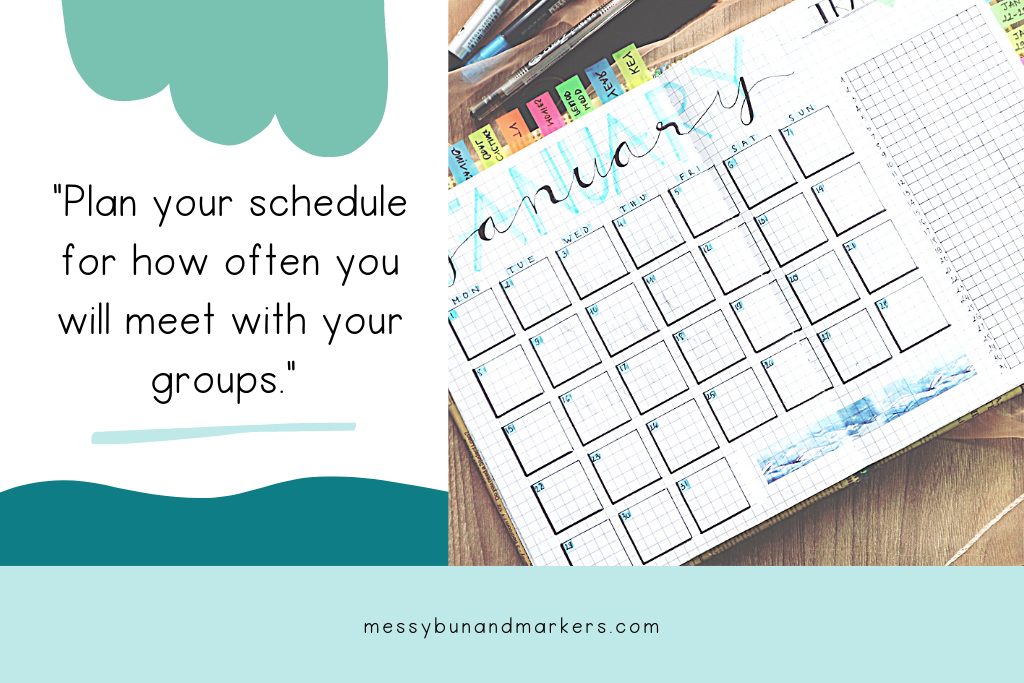
I like to have students complete two 20-minute centers a day. I create my schedule so that I see my high-need students more often during the week. While I work with a group my other groups are working at different phonemic awareness, phonics, reading, and writing centers.
Rules and routines for small group instruction
Tip number 5 is to create rules and routines. As a group, develop expectations for literacy centers. Write what you will be doing and what your students will be doing. Creating expectations as a group helps students to feel ownership over the rules.
Centers/ independent work can be a challenge for many kids. Your students will need to build up their stamina for working by themselves. Make sure that you ease into literacy centers at the beginning of the year. Start with fewer types of centers and a shorter amount of time.
After a few weeks, you will be so impressed by how well your students can complete literacy centers and how they can work the whole time!
Having a timer is a great way to keep you and your students on track. A timer also creates smoother transitions for your students.
Data tracking for literacy centers
Tip number 6 is all about collecting data. This is a vital part of literacy centers because it lets you know who is making gains and who has room to grow. You can collect data in a variety of ways. I like to use a running record during guided reading and the district’s benchmark assessments.
I use this data to change up my groups every 6-8 weeks.
Running successful literacy centers in first grade doesn’t have to be hard! Just remember these 6 tips, create groups, plan center activities, organize materials, schedule groups, develop rules and routines, and track that data!
Still have literacy center questions? I am here to answer any questions you might have, so leave a comment!!
So, are you ready to run successful literacy centers in your classroom? I believe in you, teacher friend! And don’t forget to grab How to Run Literacy Centers Like a Pro!
You are going to rock literacy centers this year!!
Happy Reading!